Design Sprints
What are they?
Relatively short projects that challenge a designer’s abilities and imagination.
Start With a Sketch
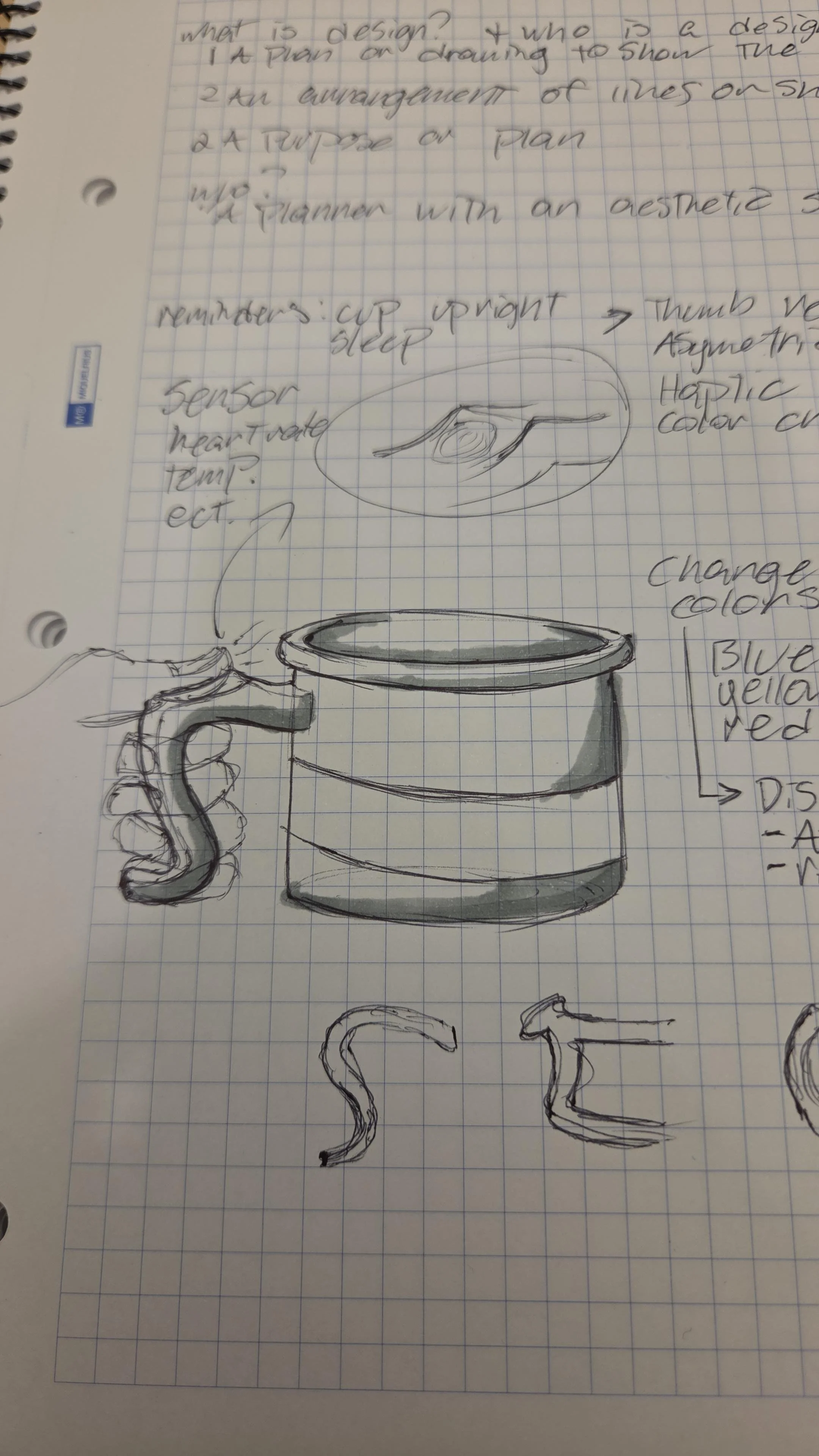
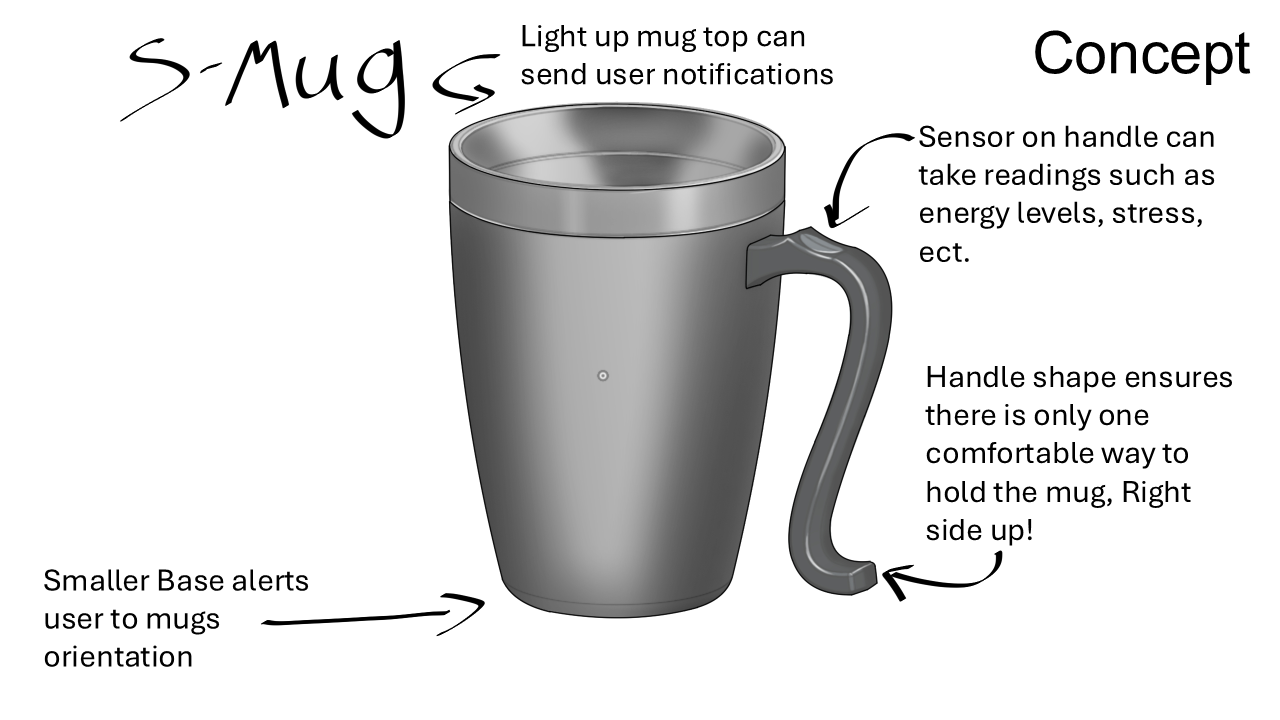
Simple Digital sketch of an ergonomic coffee mug with a handle that is only comfortable one way.
3D Model
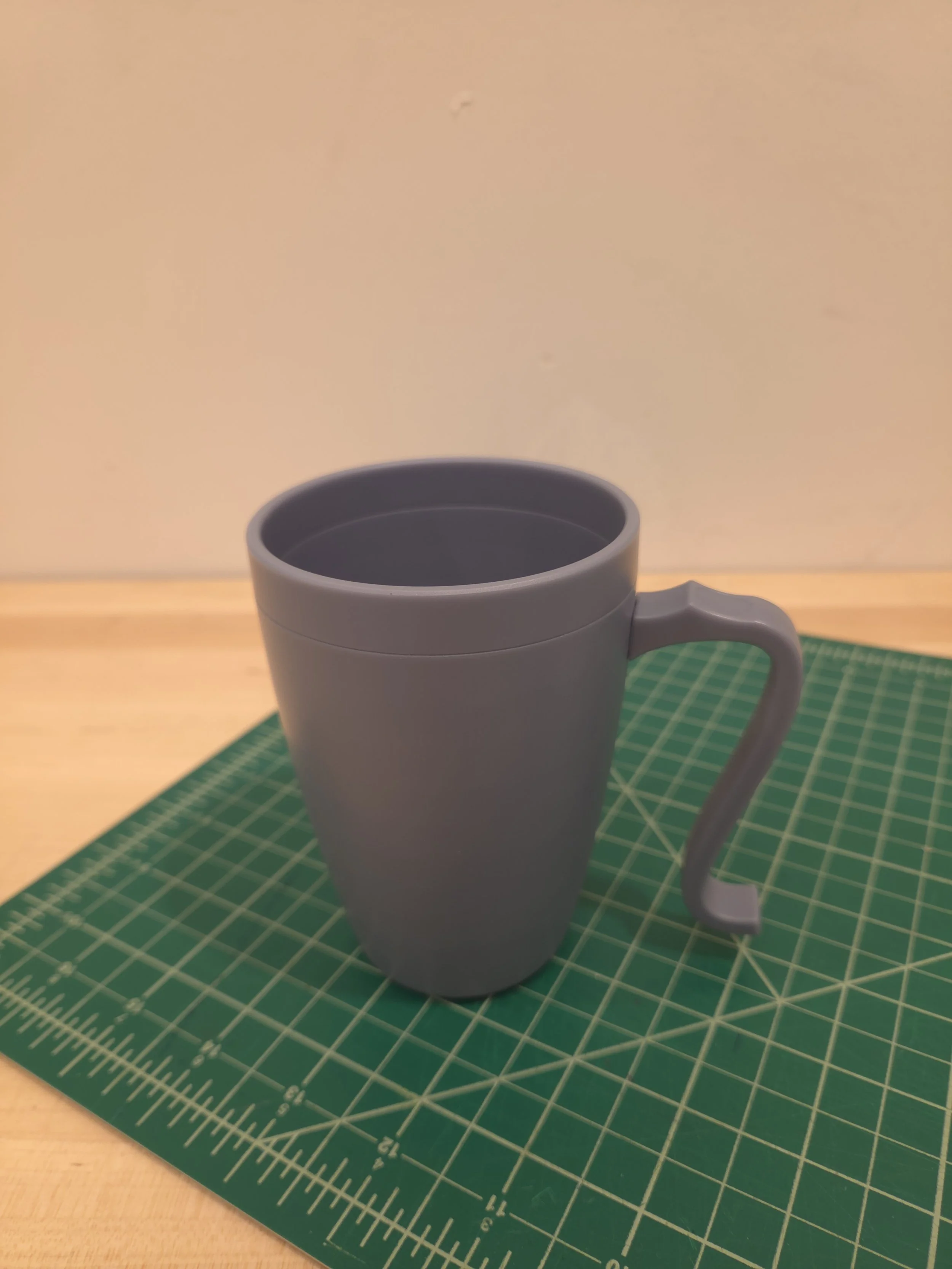
After I made a quick 3D model in on shape that I printed to scale on the Anycubic M7 MAX. This way I could conduct some quick user testing for ergonomics, comfortability and intuitive use.
Holes were placed in the bottom to discourage users to actually drink from this prototype cup.
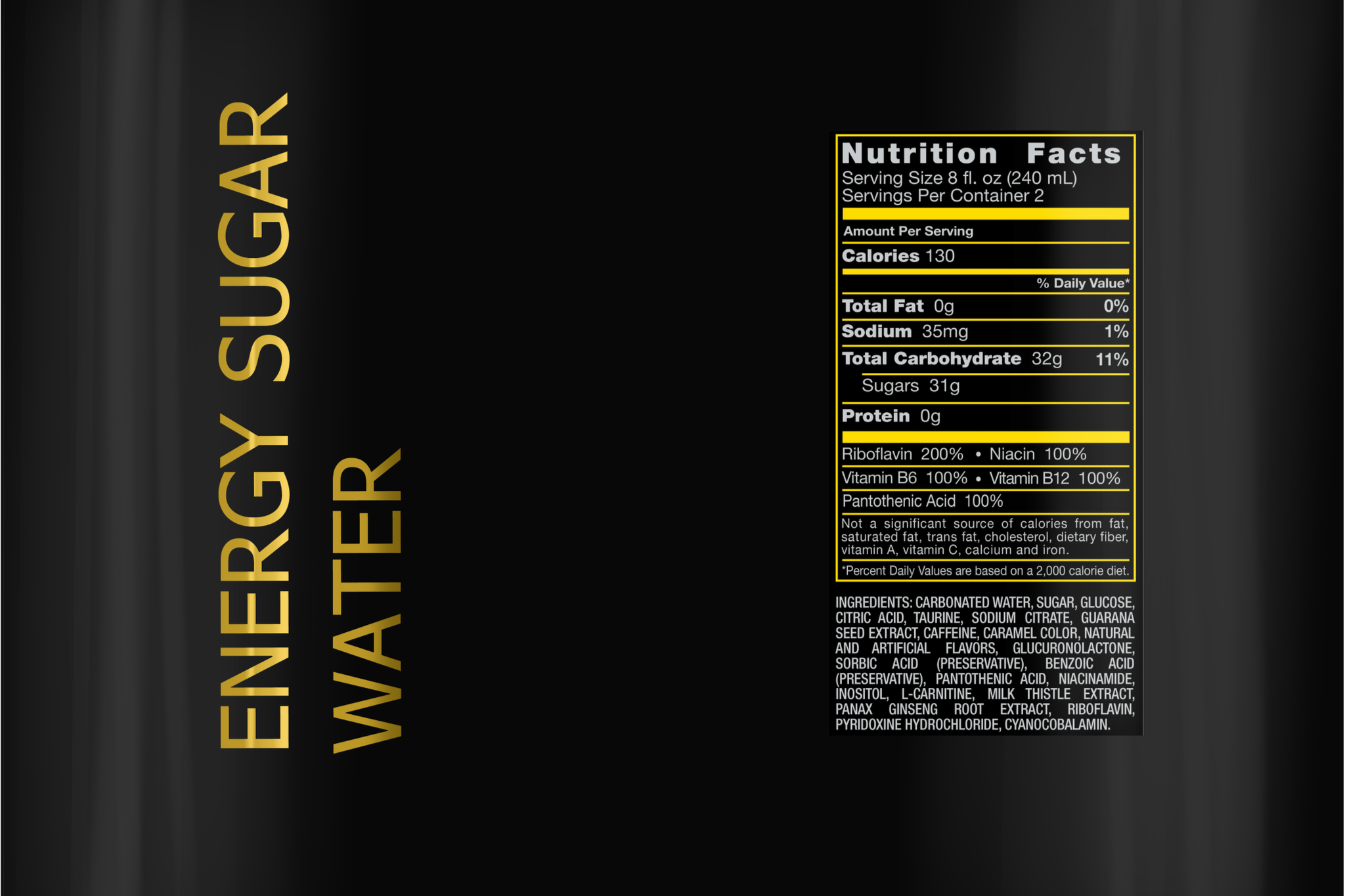
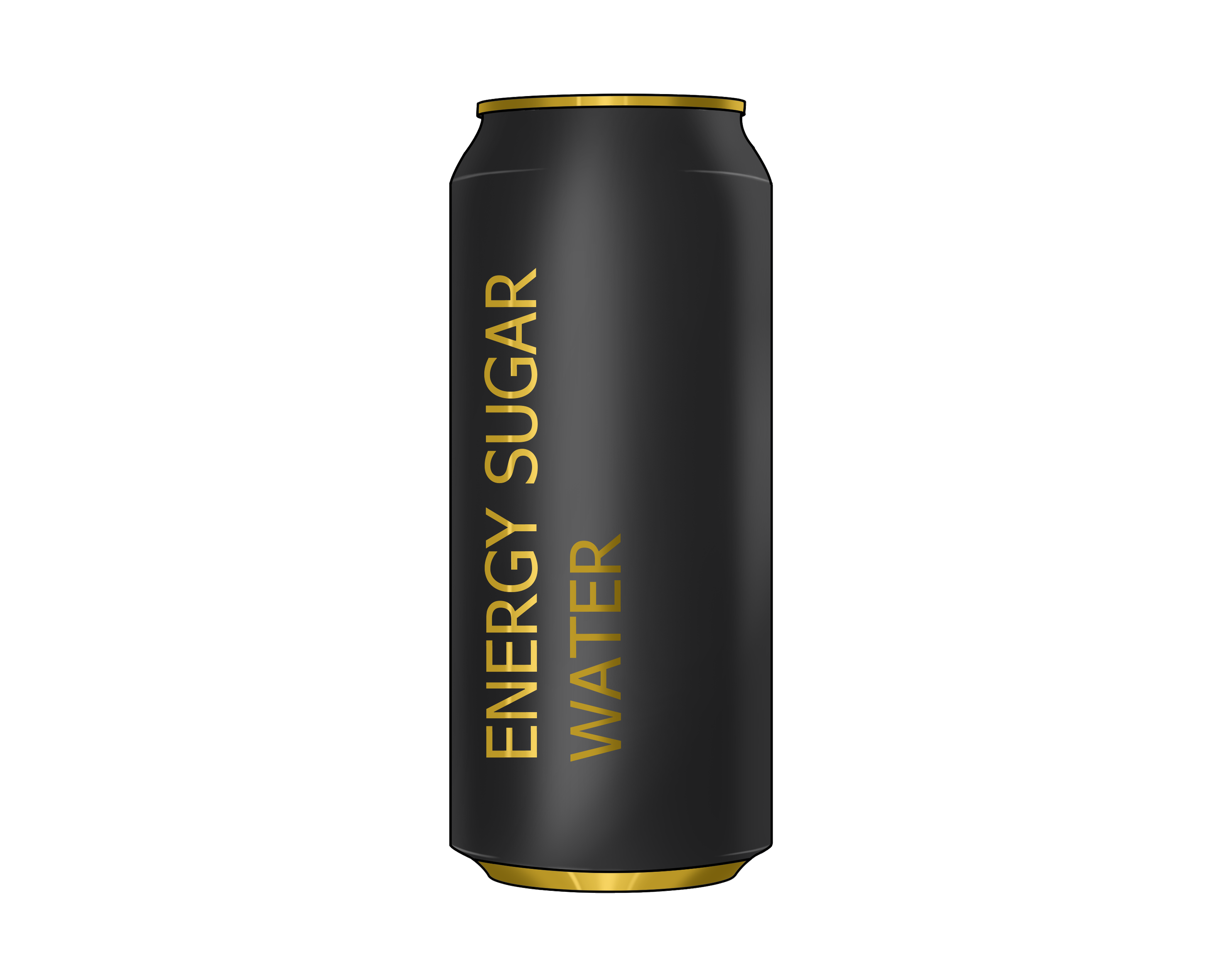
This sprint centered around the idea that companies couldn’t use more than 3 words, photo real images, or branding like logos to advertise their products.
I imagined this would lead to incredibly restrictive branding for current products where brands are on everything including our clothing, cars, and pasted all over our social medias.
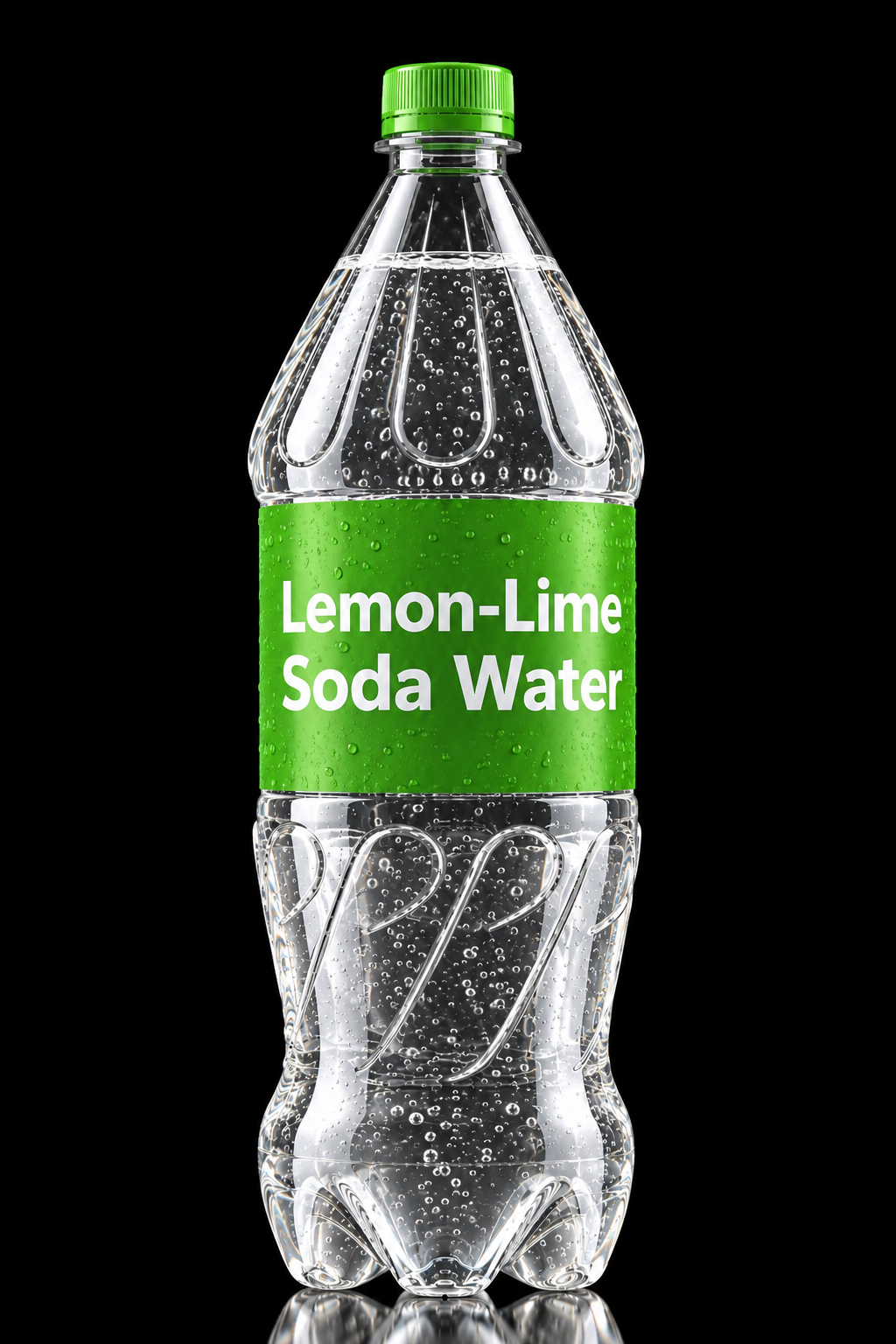
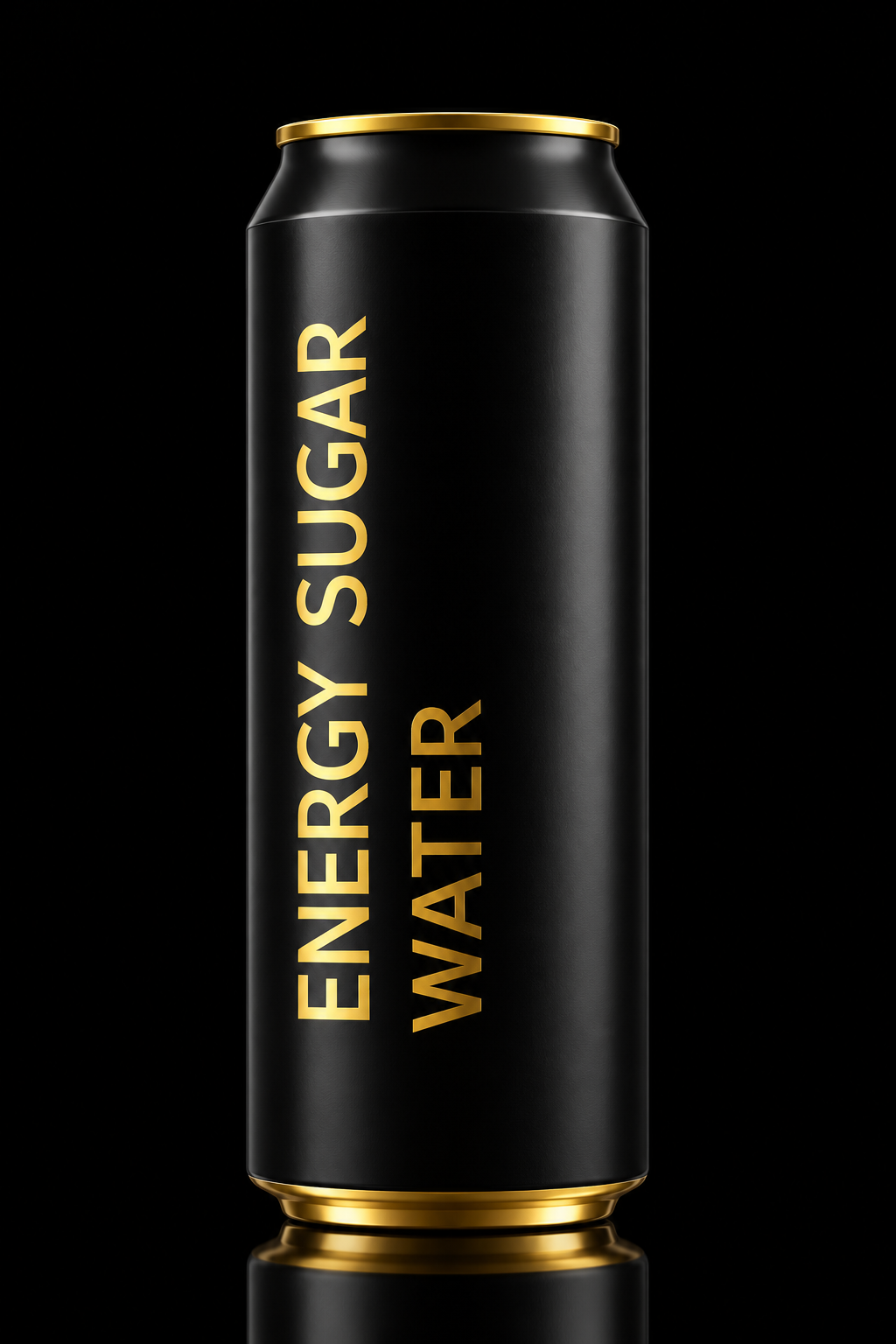
Instead, I relied on already recognized colors of popular soda brands. This allowed me to keep the ‘soul’ of the brand while meeting restriction requirements and sneaking in a small allusion to the Pepsi brand which went unnoticed by the sensors.
Product Rebranding
Featured Products
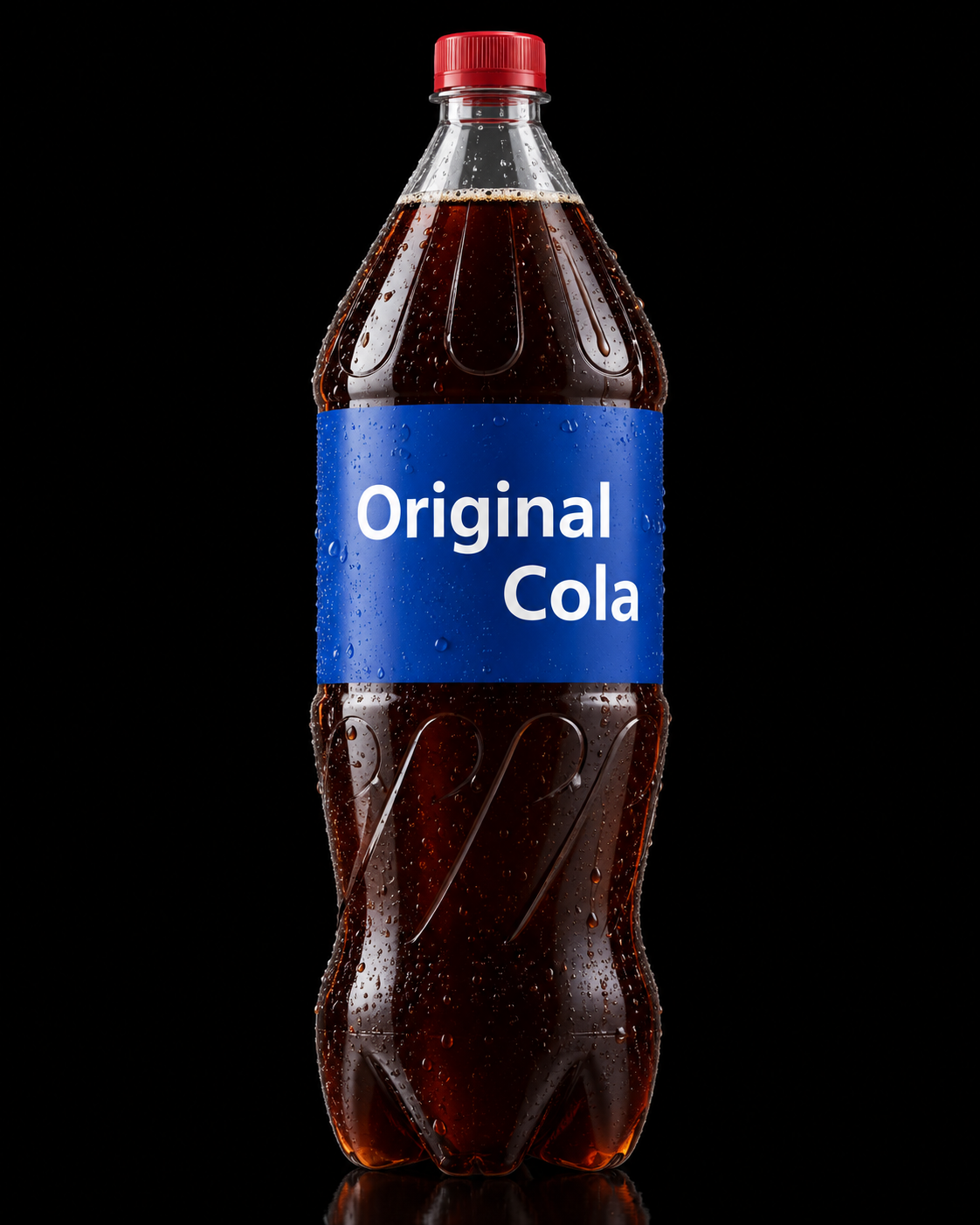
Sketches rendered with Viscom AI
Transportation
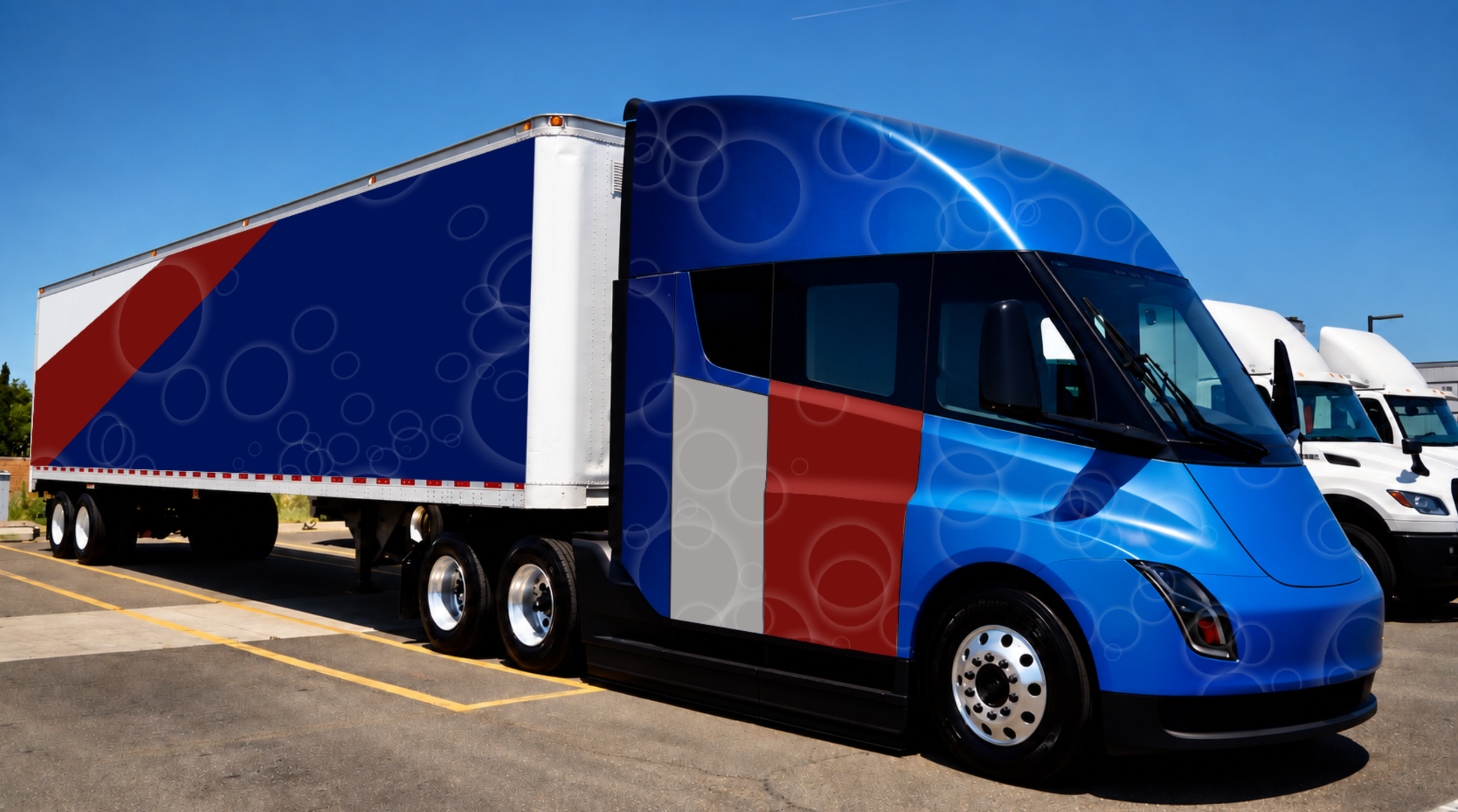
Semi Truck Decals
Along with Rebranding the products themselves, I also needed to rebrand another part of the company, in this case product transportation.
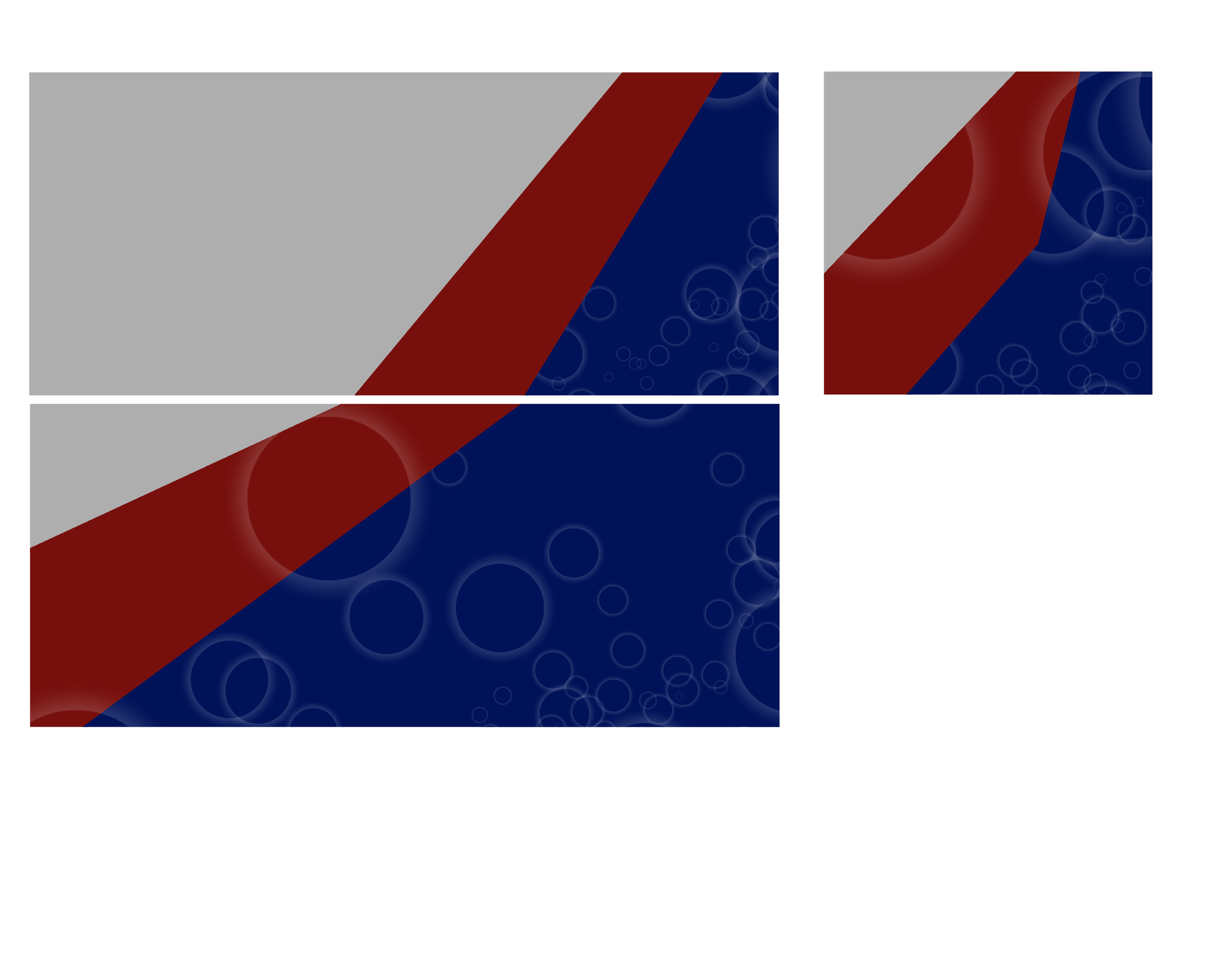
This is a quick mockup of the vinal wrap a Pepsi truck of the future would look like. The colors are from the current Pepsi brand Logo. The bubbles are an abstract allusion to the fizz and condensation that accompany an opened bottle of Soda.
The “I’m learning Blender Blog”
This week: Blender
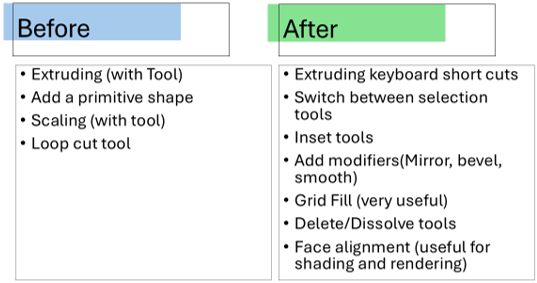
For this learning process I first tried using the program on my own with no outside help (Hell), then I would find a tutorial online which would walk me through understanding the program. When I started using Blender, I didn’t have much familiarization with it or any sculpting type modeling. At first, I found it difficult to do anything, Once I figured out, I could change my ‘primitive’ shapes I decided to attempt to make a lightsaber which are traditionally very simple cylinders with simple greebles sticking out. This did not go well; I kept breaking the mesh attempting to change the mesh and add shapes. After this I decided to look up a relatively quick tutorial on how to build a Tie fighter (staying on theme here). This tutorial taught me how to use selection tools (faces, edges, vertices), extrusion and scaling short cuts, and modifiers. I did have to end up having to delete and go back to change something that wasn’t covered in this shorter tutorial, but I was able to get it figured out quickly. I would say the tutorial I went through was very helpful and now I have a game stylized Tie fighter. Next weeks blog… Blender… Infographic to follow.
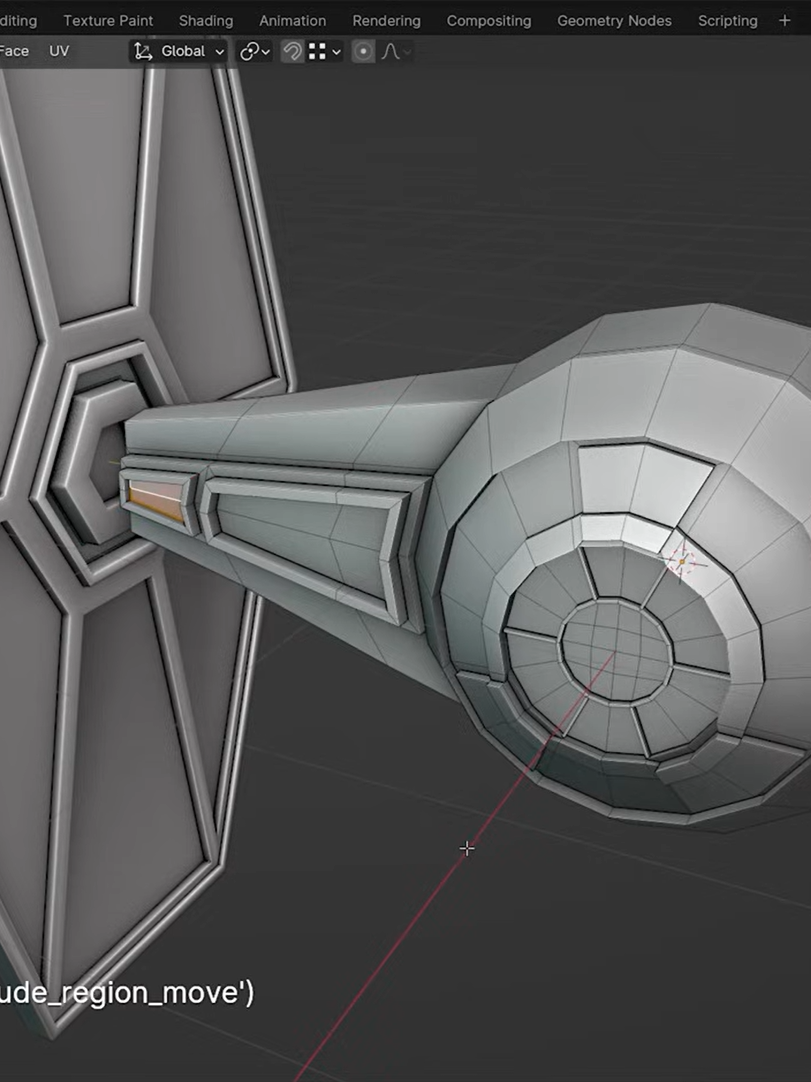
Video Tutorial Link: https://www.youtube.com/watch?v=SVl_tlbGrh4
The Emotional Journey
This is a graphic I was given from someone who did an interview with me about my learning experience where they get to choose how my learning process looks when ‘mapped out’. If you ever want to know what people think your head looks like I would recommend this!
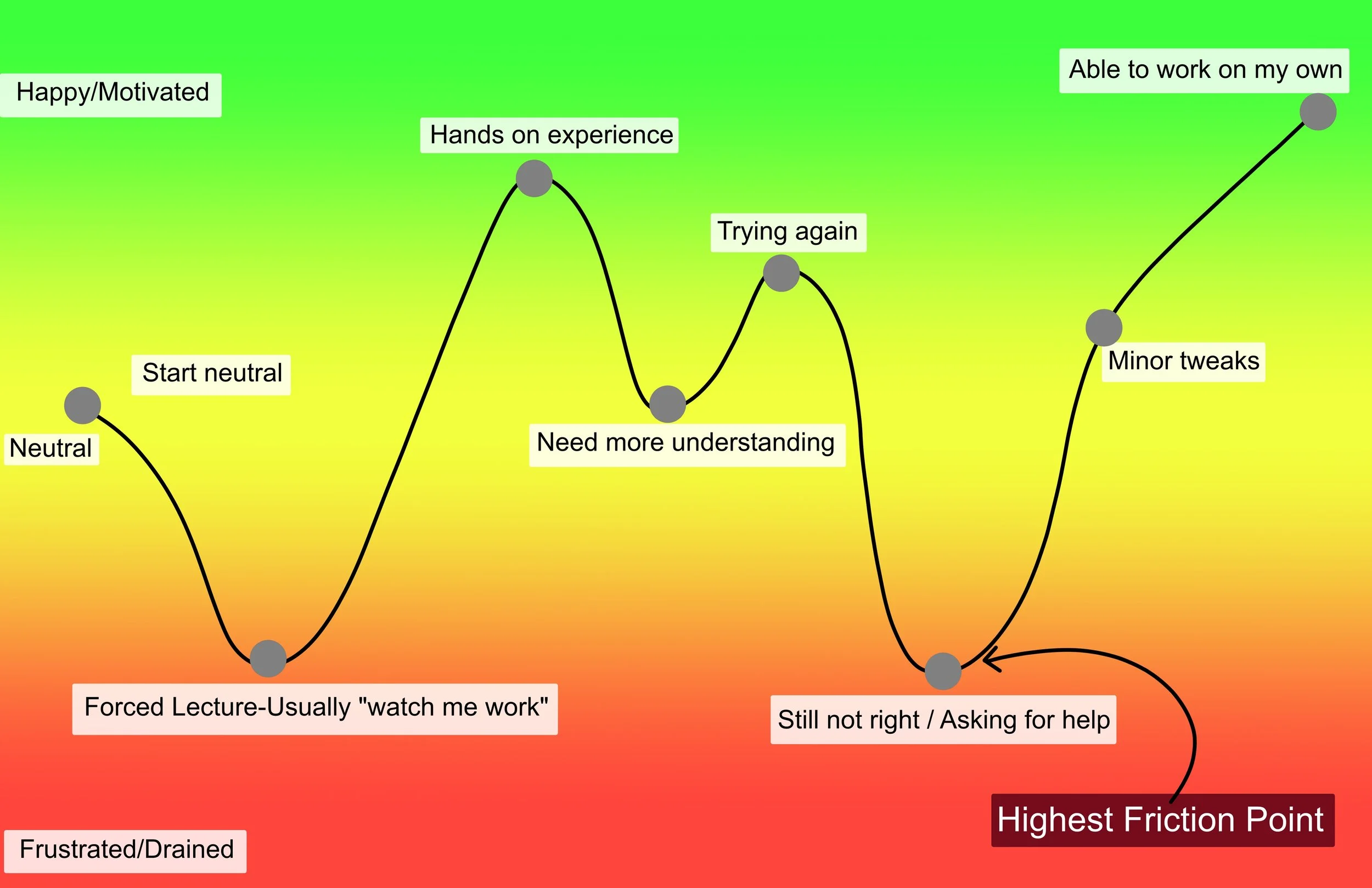
Left side is usually the start of a project or ‘new thing’.
They put me at a neutral state because there is not friction yet but there is also not much excitement usually, the whole temper your expectations thing…
Then it immediately goes straight down, because I hate change…
At the they placed me in the green and very satisfied with the work area.
Right before then they noted I tend to hit my highest friction point. This is the area I think takes the longest to get out of. It’s the take a step back, go take a break (5 minutes, an hour, a month if it’s my own project and not something important) and come back when I’ve recollected myself.
This keeps me from making dumb mistakes that cost time and money
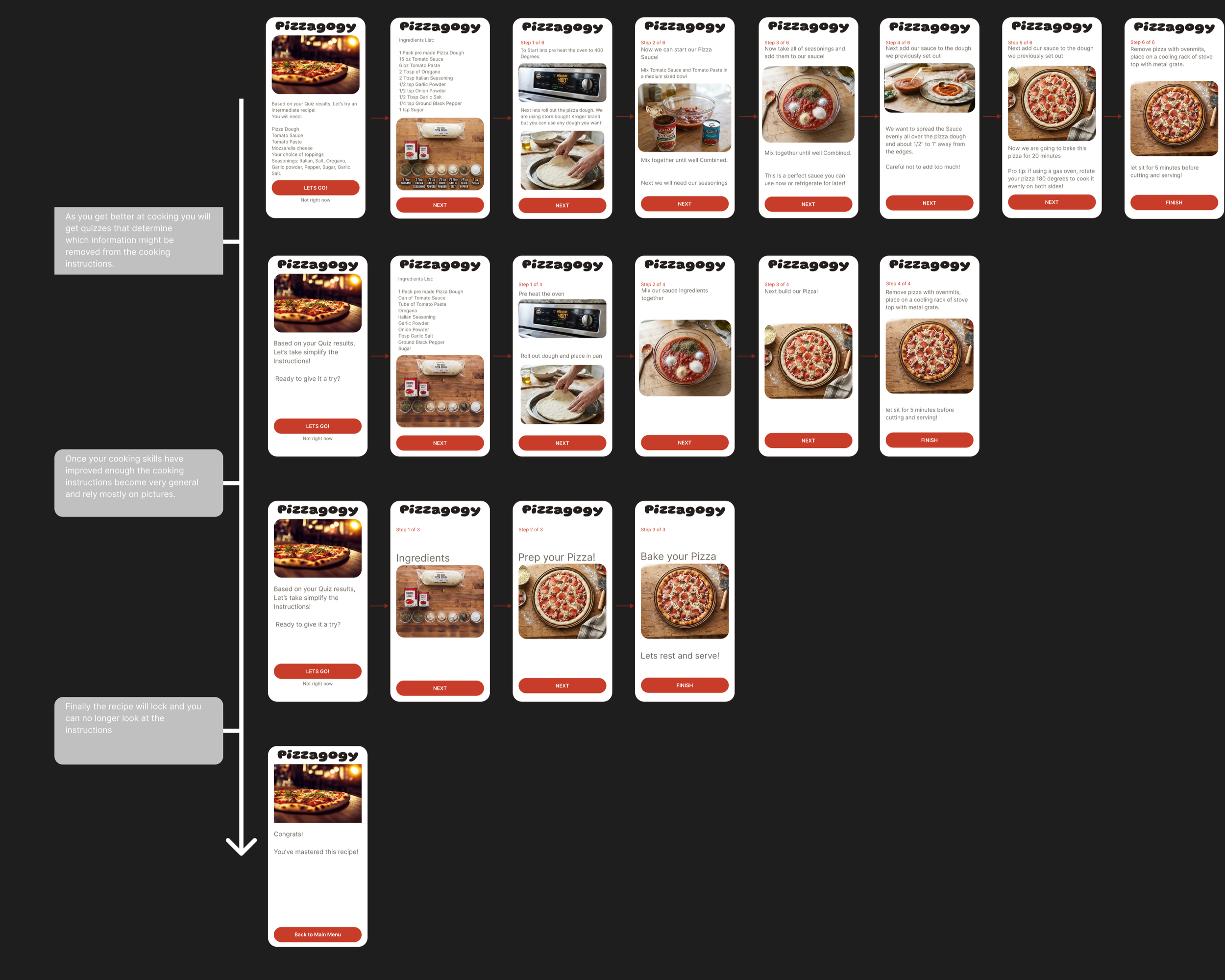
Pizzagogy App
This was a group sprint centered around progressively unplugging from technological reliance and making the user retain information on their own.
The idea is that the app would slowly begin to remove bits of information as the user progressed with their cooking.
This would be tested with short quizzes every few times they accessed a recipe.
Ultimately the goal was to remove the user’s need to look up any information and make them a better cook.